
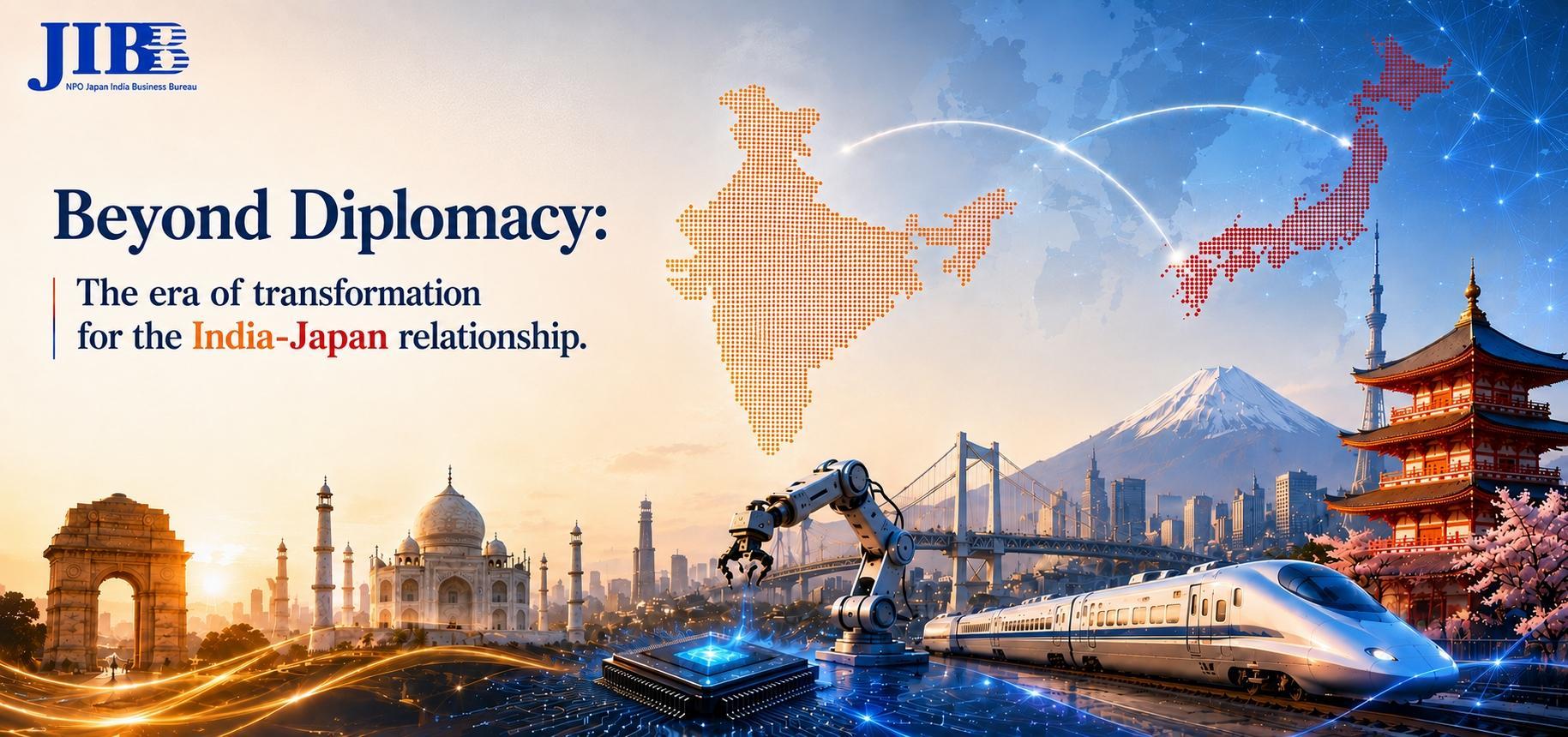
For ages, the Indian-Japanese relationship has been defined in terms of companionship, diplomacy, and shared values. However, today, we are entering into a new era of business and strategic partnership that will change the future of the Indo-Pacific region in an unprecedented way.
Building a structure for the future of the Indo-Pacific region based on industrial ecosystems, business relations, high-tech manufacturing, technology transfer, talent mobility, digital innovations, and other factors, we are creating a whole new growth architecture for Asia.
A Future-Oriented Partnership
As the global business environment changes rapidly, companies are restructuring their supply chains, and governments are paying closer attention to economic resilience, new partners become essential for global success.
With all the advantages that India and Japan offer each other — including world-class technological expertise, engineering, precision manufacturing, rapidly developing market with a skilled workforce, a fertile ground for innovation, digital innovations and much more — we see a unique opportunity for economic synergy.
Instead of pursuing only higher trade volumes, both sides are focused on developing sustainable economic corridors, which we explore in detail in Why Japan and India Are Stronger Together.
The Evolution of a New Partnership
In recent years, there has been a growing focus on trusted industrial ecosystems.
The global disruptions showed us what risks are connected with concentrating industries in one area. To survive the ever-changing conditions and geopolitical tensions, businesses need diversified networks.
Today, both India and Japan encourage industries to collaborate in many spheres including:
- Semiconductor manufacturing (anchored by initiatives like the India Semiconductor Mission 2.0)
- Electronics and precision engineering
- Clean energy technologies
- Mobility technologies
- Smart logistics
- Data centers
- Advanced materials and resource extraction
It is crucial that these are not just relocation projects but entire industrial ecosystems where innovation, research, manufacturing, and other aspects are tightly interwoven.
Infrastructure as the Foundation of the Future
Building large-scale infrastructure has become one of the key features of India-Japanese cooperation.
Over the years, Japanese technical expertise and financial investments have contributed greatly to the modernization of India, which in turn became a huge driver for transforming mega projects into reality.
Modern ports, industrial corridors, urban transport systems, logistics and data infrastructure are helping to create the physical foundation for future prosperity.
In the near future, intelligent infrastructure will become the core focus — projects where artificial intelligence and automation become the backbone instead of the final step.
This approach is fully aligned with the needs of the contemporary global investor who is looking for stability and sustainability.
The Human Capital Is the Key to the Future
However, the future will not belong to the company that invests in technology the most.
The future will belong to the company whose employees will make it happen.
One of the main advantages of India-Japanese cooperation is the focus on talent exchange and academic collaborations.
India is still producing huge amounts of qualified professionals, which makes the demographic problem for many Japanese industries a non-issue anymore.
Moreover, people-to-people contacts are extremely important when we talk about strong business relations since trust, long-term experience, and good communication are essential elements of any healthy business partnership.
Innovation and Collaboration for Success
The next decades of success belong to those who know how to innovate and collaborate with others.
India and Japan provide perfect conditions for such collaboration. In particular, we see a high potential for innovations and product development in such emerging industries as artificial intelligence, robotics, deep technology, electronics, sustainable mobility, and data center management.
Early participants in such collaborations will find themselves in the middle of emerging markets that will define the future of global economy.
Our goal should not be to win ourselves but to co-create the solutions that could solve international problems.
How Regional Cooperation Could Boost Economic Development
Another positive trend is that regional collaboration is getting more and more popular in recent times.
Working directly with local governments, industrial parks, educational institutes, and business associations will not only help companies to find better ways for successful investment but will also boost cooperation and cultural exchange between communities.
Challenges Ahead and Their Solutions
However, even with this promising outlook, there are some issues we should pay attention to.
Cultural differences, complex regulatory environment, differences in project implementation strategies, and different business expectations should always be considered carefully.
Especially, for small and medium-sized companies, it may seem challenging to get used to all these nuances.
It becomes clear why cross-border facilitators are becoming more and more popular today.
The more efficiently both nations will collaborate, the more benefits they will reap from this.
Conclusion
In conclusion, it must be said that India-Japanese partnership could be called the most strategically important international relationship of our century.
Not only does it provide unique possibilities for economic and technological collaboration but also defines the vision of future innovation in many spheres and sustainable development of the Indo-Pacific region.
Today, at JIBB, we observe how businesses, policy-makers, innovators, and researchers from both countries join forces to work together towards common goals.
We have left the era of discussing whether or not India and Japan should cooperate. Now it is time to discuss how together they will shape the future of global business.