
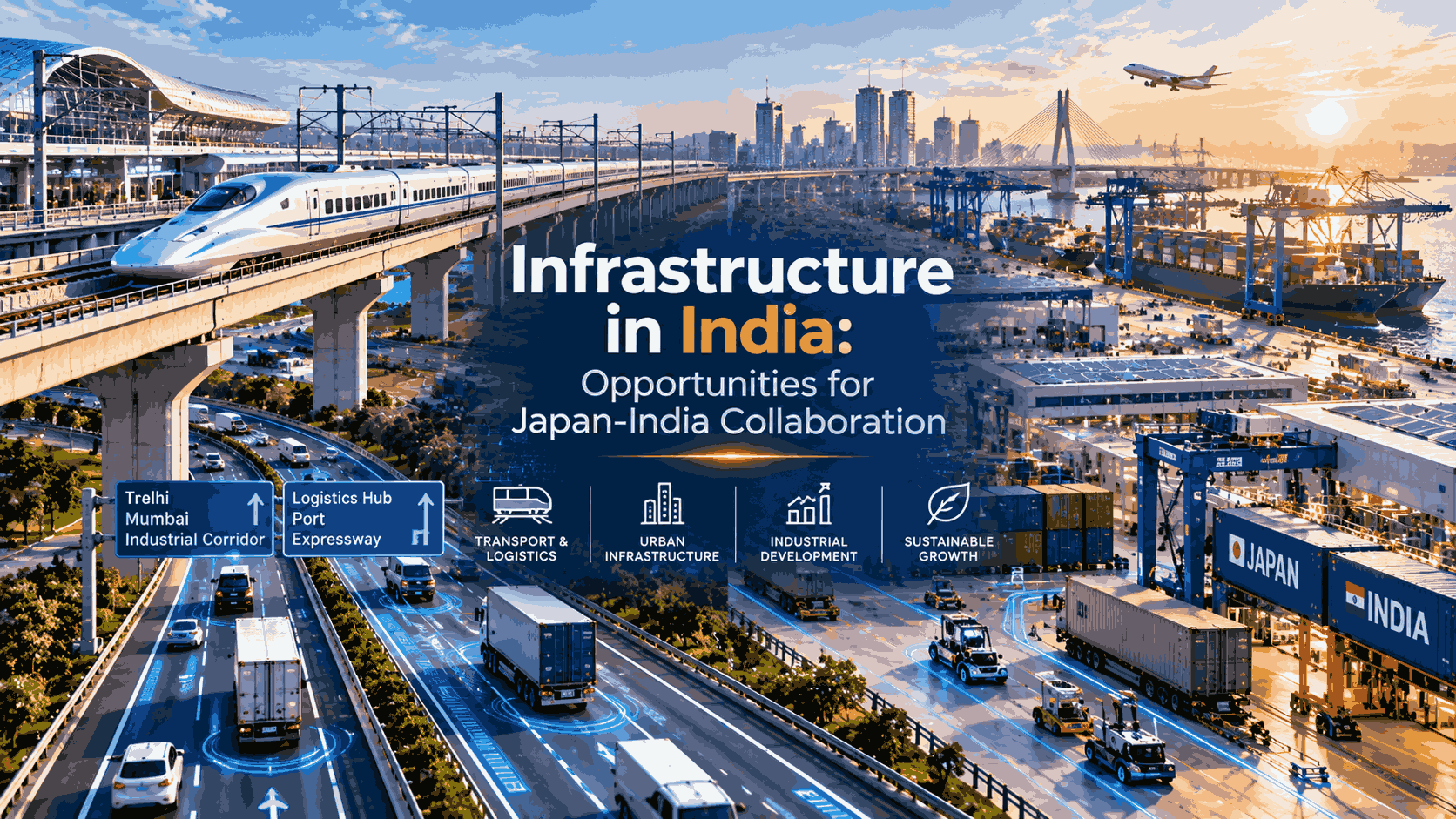
The infrastructure sector in India is going through a revolution as the country keeps on spending on connectivity, urbanization, logistics, industry and sustainable infrastructure. Be it highways or railways, ports or airports, metros or industrial corridors, the importance of infrastructure is increasing to support economic aspirations of the nation.
In this context of developing infrastructure scenario, Japan based firms have several opportunities in terms of engineering, construction, mobility, logistics, technology, project development and infrastructure management. Having a shared past of development cooperation between Japan and India, infrastructure is one such domain which can see more business collaboration.
India's Growing Infrastructure Landscape
The growth of India's infrastructure sector is linked to the overall economic and industrial development of the country. With increasing manufacturing activities and integration of businesses with the domestic and international value chain, efficient transportation and logistics along with urban infrastructure is becoming a necessity.
Significant investments by the government, involvement of the private sector and infrastructure initiatives taken by the government have helped in developing infrastructure including roads, rail networks, ports, airports, industrial estates, logistics centers, urban transportation and other vital infrastructures.
Also, initiatives like PM GatiShakti have made integrated infrastructure planning more important. Through integration of various infrastructures and economic activity, an attempt has been made to link production centers, logistics centers, ports and markets.
Such changes in the scenario are opening up opportunities for large infrastructure projects as well as specific technologies, engineering, equipment and services related to infrastructure.
Key Areas of Infrastructure Development in India
Transport and Logistics Infrastructure
Transport infrastructure plays a vital role in India's development. The development of transport networks such as highways, railways, dedicated freight corridors, seaports and multimodal logistics corridors is playing a vital role in improving the linkages between industries and urban centers.
One example of collaboration between India and Japan is the Western Dedicated Freight Corridor that links Dadri in Uttar Pradesh to the Jawaharlal Nehru Port in Maharashtra. The 1,506 km long western corridor has received funding from Japan International Cooperation Agency (JICA).
Such infrastructural development offers great opportunities to Japanese companies in areas like transport technology, engineering, freight management, automation and equipment among others.
Urban Infrastructure and Mobility
The growing number of Indian cities is generating an increased need for the development of efficient urban infrastructure. Transport, metro rail, water facilities, waste management, and other types of urban systems are getting significant attention in the process of city development.
Many urban infrastructure initiatives have been undertaken in India by Japan through the cooperation based on JICA projects. The knowledge and skills of Japan in urban planning, mobility, infrastructure management and operation will be useful for India.
There are additional perspectives for this area not only for big metropolitan cities but also for all growing cities in India.
Industrial Infrastructure
The development of infrastructure is also highly connected with manufacturing goals of India. The industrial estates, manufacturing hubs, logistics centers, warehouses and utilities are necessary elements which allow business to create their manufacturing activities and develop.
With India becoming more attractive as a manufacturing center, there is a growing need for such infrastructure that would connect factories with suppliers, logistics centers, ports and markets.
In this situation Japanese companies can benefit from their experience in engineering, industrial machinery and automation, construction and infrastructure-related services.
Sustainable and Resilient Infrastructure
Sustainability and resilience are becoming increasingly important aspects of infrastructural projects. The increasing need for infrastructure in India is leading to a demand for technologies that help in addressing issues pertaining to energy efficiency, water management, sustainable infrastructure, disaster resilience and resource management.
The Japanese have considerable experience in building infrastructure to cope with environmental and disaster management challenges. Thereby, knowledge sharing in areas like disaster risk reduction, water infrastructure, resilient urbanization and sustainable development can become another aspect of India-Japan collaboration.
Opportunities for Japanese Companies in India
The development of infrastructure in India brings opportunities throughout the infrastructure value chain. In accordance with their strengths, Japanese businesses can look into the areas of engineering and design, construction technology, infrastructure equipment, transport infrastructure, logistics, project development, intelligent infrastructure and infrastructure management.
Moreover, regulation creates opportunities for foreign involvement in various infrastructure sectors. For instance, according to DPIIT, 100% foreign direct investment via the automatic route is allowed for constructing, operating and maintaining certain railway infrastructure projects.
However, entering the Indian infrastructure market means being aware of regulations, procurement processes, structure of the project and state policies. Opportunities in infrastructure can vary greatly depending on the location, sector and particular projects.
It might be vital for Japanese firms to find the proper partners and understand the Indian market requirements.
Japan-India Infrastructure Cooperation
Infrastructure has been a traditional sphere of cooperation between Japan and India. Japanese development aid, technical knowledge, and private companies' involvement have been helpful for the realization of many projects in the spheres of transport, urban development, water infrastructure, and others.
The Western Dedicated Freight Corridor can be considered as an example of such cooperation. There were significant financial and technical inputs from JICA for this project which contributed to the development of India's freight transport system.
However, the sphere of cooperation is expanding and changing. With diversification of the needs of India, new spheres of cooperation are emerging, namely smart infrastructure, digital technologies, sustainable development, logistics, mobility and engineering innovations.
Thus, there appears the opportunity for the Japanese companies to engage in India's infrastructure development through major projects and technologies.
How JIBB Supports Infrastructure Opportunities
However, for businesses that intend to venture into or grow in India, knowing the market is just a start. Identifying the right partners, identifying opportunities, and knowing the local business environment are just as crucial.
The Japan India Business Bureau (JIBB) facilitates India-Japan business interaction through market research, business facilitation, networking, and partnership.
By conducting market research, business facilitation, networking, and partnerships, JIBB could help Japanese businesses identify their opportunities within the Indian infrastructure business environment.
Infrastructure development being increasingly linked with manufacturing, logistics, technology, and regional economic growth, knowledge of these larger ecosystems would serve a good purpose.
The Future of Infrastructure in India
The evolution of the Indian infrastructure is shifting towards connected systems that combine transport, logistics, manufacturing, urbanization and technology.
From the perspective of Japanese firms, there are a number of business possibilities not only in existing sectors such as transport and construction, but also in emerging industries such as smart infrastructure, sustainability, advanced mobility and infrastructure technology.
With the continued improvement of connectivity in India, collaboration between Japan and India on infrastructure could open up business possibilities in many sectors for companies, technology firms and investors alike.
Companies looking to venture into India would do well to understand the Indian infrastructure environment and build appropriate local relationships.
Frequently Asked Questions
1. What is the infrastructure sector in India?
The infrastructure sector in India covers essential systems and facilities that support economic and social development. It includes roads, railways, ports, airports, urban transport, logistics, water infrastructure, industrial infrastructure and related services.
2. Why is infrastructure important for India's economic growth?
Infrastructure connects industries, businesses, cities and markets. Efficient transport, logistics and urban infrastructure can support manufacturing, improve connectivity and facilitate the movement of people and goods across the country.
3. What are the major infrastructure opportunities in India?
Major opportunities include roads and highways, railways, freight corridors, ports, airports, metro systems, industrial infrastructure, logistics, water management, sustainable construction and smart infrastructure.
4. What opportunities are available for Japanese companies in India's infrastructure sector?
Japanese companies can explore opportunities in engineering, construction technologies, mobility, logistics, infrastructure equipment, project development, automation, smart infrastructure and infrastructure management.
5. How does Japan contribute to infrastructure development in India?
Japan has supported infrastructure development in India through development assistance, technical cooperation and private-sector participation. JICA has supported projects involving freight railways, metro systems, highways, water infrastructure and other development areas.
6. What is the Western Dedicated Freight Corridor?
The Western Dedicated Freight Corridor is a 1,506-kilometre freight railway connecting Dadri in Uttar Pradesh with Jawaharlal Nehru Port in Maharashtra. It is an important example of Japan–India cooperation in transport and logistics infrastructure.
7. How can Japanese companies explore infrastructure opportunities in India?
Companies can begin by identifying relevant sectors and regions, studying market and regulatory requirements, assessing potential projects and finding suitable Indian partners. Local market knowledge can be particularly useful when navigating India's diverse state-level business environment.
8. How can JIBB help Japanese companies entering India's infrastructure sector?
JIBB can support Japanese companies through market research, business networking, partnership development and India–Japan business facilitation, helping companies understand the Indian market and identify relevant business opportunities.
Looking to Explore Infrastructure Opportunities in India?
JIBB helps Japanese companies connect with India's growing business ecosystem through market research, business facilitation, partnership development and local market insights.
Whether you are evaluating the Indian infrastructure market, looking for potential business partners or exploring opportunities for technology and project collaboration, connect with JIBB to discuss your India–Japan business requirements.