
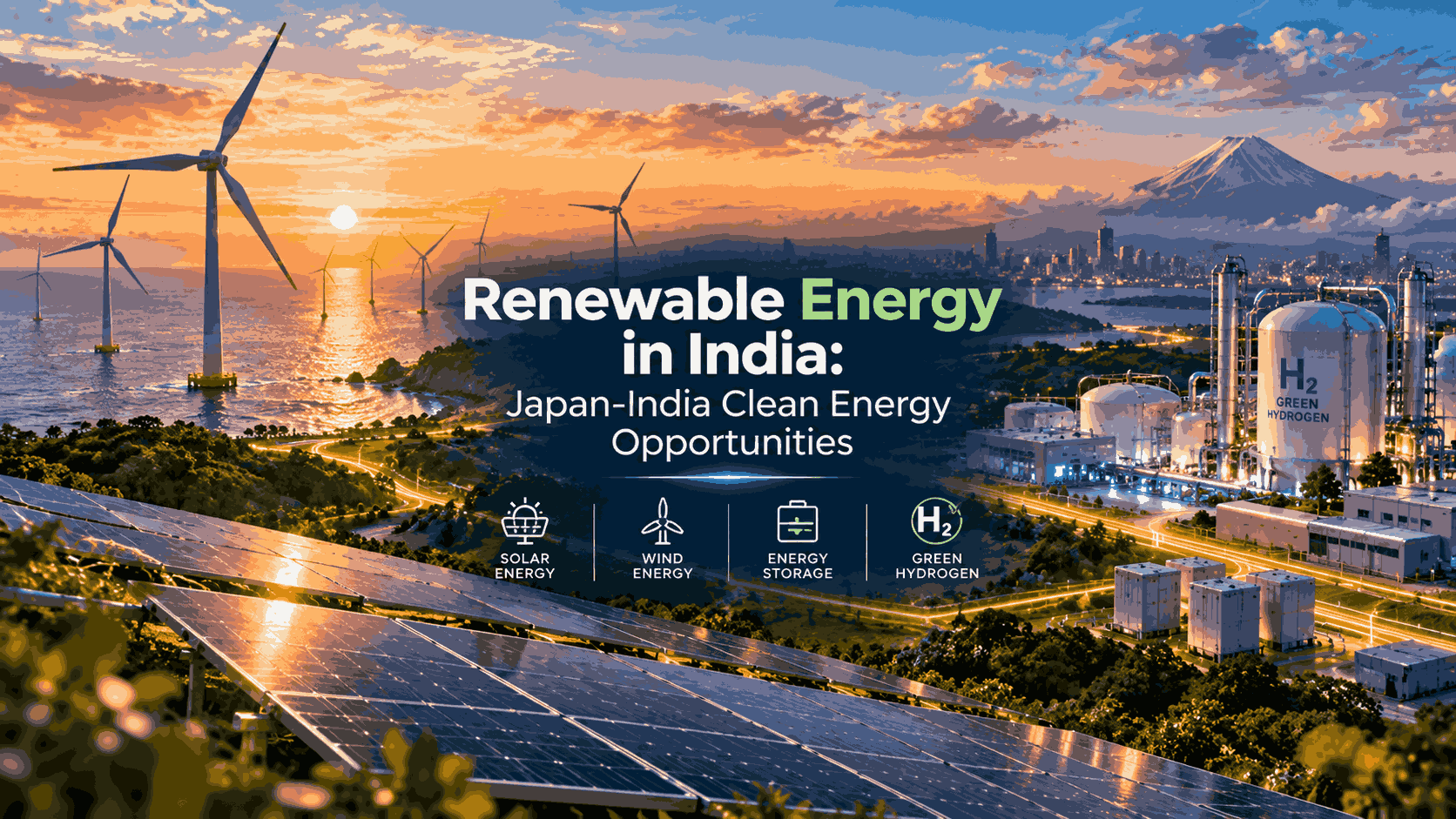
Renewable energy in India includes solar, wind energy, hydropower, bioenergy, energy storage, and green hydrogen. Given the rising demand for electricity and the manufacturing and policy capacities for renewable energy, India is fast becoming one of the largest renewable energy markets in the world. As of August 2026, India has about 295.55 GW of installed renewable energy capacity, including 168.04 GW of solar and 58.52 GW of wind energy capacity.
Such developments present great opportunities for Japanese companies in renewable energy technology, manufacturing, projects, energy storage, hydrogen and clean energy supply chains. The technologies available in Japan and the potential of renewables in India make a good basis for Japanese-Indian cooperation in clean energy.
India's Growing Renewable Energy Sector
India's renewable energy industry includes solar, wind, hydro, bioenergy, waste-to-energy, and new clean energy technologies. The solar industry has become an important component of India's renewable energy growth, while wind energy still benefits from India's manufacturing and development infrastructure.
There is much more to renewable energy than electricity production. There is increasing link between renewable energy and batteries, smart grids, green hydrogen, electric mobility, industrial decarbonisation and clean energy manufacturing.
Why India Is Emerging as a Renewable Energy Market
There are multiple factors that are attracting investments in the entire value chain of clean energy in India, namely its high energy consumption, energy sources, manufacturing facilities and supportive policies.
India has already developed certain capacity of energy generation based on solar and wind power. As per MNRE, India had 168.04 GW of solar power and 58.52 GW of wind power till August 2026.
This offers opportunities for not just the power generation companies but also the equipment manufacturers and other associated parties.
Key Renewable Energy Sources in India
Solar Energy
The importance of solar power generation is evident in India's renewable energy expansion strategy, which includes utility scale, rooftop, hybrid projects and off-grid systems. The Indian solar ecosystem offers possibilities in manufacturing photovoltaic cells, components, project development and energy storage.
Wind Energy
India possesses a complete wind energy ecosystem that includes project development, operation, and manufacturing of wind turbines. As per MNRE, India is one of the leading countries with the highest wind power capacity in the world.
Hydroelectricity continues to be another significant renewable energy source for India, both large scale and small-scale hydro sources. There is also potential for pumped storage facilities to provide flexibility to the grid network.
Biomass and Waste-to-Energy
Biomass, biogas, and waste-to-energy may contribute to energy production from distributed sources, along with diversification of renewable energy resources.
Energy Storage and Renewable Energy Integration
As solar and wind generation expands, energy storage becomes increasingly important for balancing electricity supply and demand.
Opportunities include:
- Battery Energy Storage Systems
- grid-scale storage
- battery technologies
- energy-management systems
- smart grids
- hybrid renewable projects
- power-management technologies
MNRE is currently supporting measures related to Battery Energy Storage Systems, including viability-gap funding, while also highlighting co-location of storage with solar projects for grid stability and cost efficiency.
Green Hydrogen and Clean Energy in India
Green hydrogen is one of the new segments in India's clean energy portfolio. Generated via renewable electricity, it helps decarbonise sectors that are hard to electrify directly, such as industry and transportation.
National Green Hydrogen Mission plans to position India as a world leader in producing, adopting and exporting green hydrogen through support for the manufacturing of electrolysers, generation of green hydrogen, pilot projects, infrastructure, standardization, research & development and skills.
This opens up a number of business possibilities in electrolysers, renewables, hydrogen infrastructure, storage, transportation, and industries.
Why Japan Matters to India's Renewable Energy Industry
Japan can provide expertise related to energy technology, advanced manufacturing, energy efficiency, energy storage, hydrogen, and clean energy. On the other hand, India can provide opportunities regarding renewable energy, market size, manufacturing opportunities, and rising demand for clean energy.
India and Japan have collaborated and established the "India-Japan Clean Energy Partnership" in 2022 in sectors such as solar photovoltaic (PV) energy, wind energy, battery storage, energy efficiency, green hydrogen, green ammonia, electric vehicles (EVs), and clean energy, among others.
India-Japan Renewable Energy Partnership
The India-Japan relationship has moved beyond energy policy talks to include technology, manufacturing, and business opportunities.
The Ministry of Economy, Trade, and Industry (METI), along with Japan External Trade Organization (JETRO), convened a Japan-India Solar PV Manufacturing Workshop & B2B session in Mumbai with around 100 delegates and 18 Japanese solar industry firms in January 2026. The discussion was on solar panel supply chain cooperation and matchmaking.
India-Japan cooperation also covers hydrogen and ammonia sectors. India and Japan have signed a Joint Declaration of Intent regarding clean hydrogen and clean ammonia in 2025.
Key Opportunities for Japanese Renewable Energy Companies in India
Solar Energy and Manufacturing
Opportunities include solar PV manufacturing, components, equipment, project development, engineering and supply-chain partnerships.
Wind Energy
Japanese companies can explore wind technologies, components, equipment, project partnerships and manufacturing opportunities.
Energy Storage
Battery systems, energy-management technologies, grid integration and storage solutions represent opportunities as India's renewable capacity expands.
Green Hydrogen and Ammonia
Opportunities span electrolysers, renewable-energy integration, hydrogen production, storage, transport, industrial applications and export-oriented projects.
Renewable Energy Technology and R&D
Companies can also explore technology partnerships, R&D, manufacturing localisation and collaboration with Indian institutions.
Opportunities for Indian Companies to Collaborate with Japan
Cooperation between India and Japan is a two-way opportunity. Indian firms can cooperate with Japanese firms via technology partnerships, joint ventures, manufacturing, research and development, clean energy ventures, energy storage, and hydrogen.
Japanese strengths in advanced technology can be supplemented by India's strengths in its size of market, renewable energy sources, and clean energy ecosystem.
Government Support for Renewable Energy in India
The government policies concerning renewable energy in India include programs for solar energy, wind energy, green hydrogen, energy storage, R&D, manufacturing, and grid connection.
Additionally, MNRE has initiated its program known as 'Renewable Energy Research and Technology Development Program' for 2026-27 to 2030-31 that aims to promote R&D in the area of renewable energy.
Government initiatives now do not limit themselves to the production of renewable energy but have become concerned with manufacturing, innovation, energy storage, hydrogen and more.
Challenges in India's Renewable Energy Sector
However, there are also several obstacles that accompany the renewable-energy development in India, such as the availability of land, integration into the grid, intermittency, financing, need for energy storage, and more.
These obstacles can be overcome by technology innovation and infrastructure development.
How JIBB Supports Japan-India Renewable Energy Collaboration
JIBB may assist Japanese and Indian firms to identify the possibilities for renewable energy by providing assistance with entry into markets, identifying partners, business matching, institutional linkages, technology partnerships, and investment opportunities.
The possible connections include manufacturers of renewable energy, technology providers, project developers, component suppliers, investors, research organizations and industrial partners.
JIBB may assist firms in transitioning from market research and identification of partners to business meetings and project opportunities.
Research, Innovation & Future Clean Energy
The transition to renewables in India would involve increasing integration between solar and wind power generation along with storage, green hydrogen, smart grid systems, electric vehicles and industry decarbonisation.
This offers an opportunity for both Japan and India going forward beyond renewable energy projects, by improving technology development, manufacturing, investments, and innovation in clean energy.
Frequently Asked Questions
What is renewable energy in India?
Renewable energy in India includes solar, wind, hydropower, biomass and waste-to-energy, alongside emerging areas such as green hydrogen and energy storage. India is expanding renewable capacity while developing manufacturing, grid infrastructure and clean-energy technologies.
Why is India important for renewable energy?
India has a large and growing energy market, significant solar and wind potential, an expanding manufacturing ecosystem and government support for renewable energy, storage, green hydrogen and clean-energy technology.
What are the main sources of renewable energy in India?
The main sources are solar, wind, hydropower, biomass and waste-to-energy. Solar and wind are particularly important to India's recent renewable-capacity expansion.