
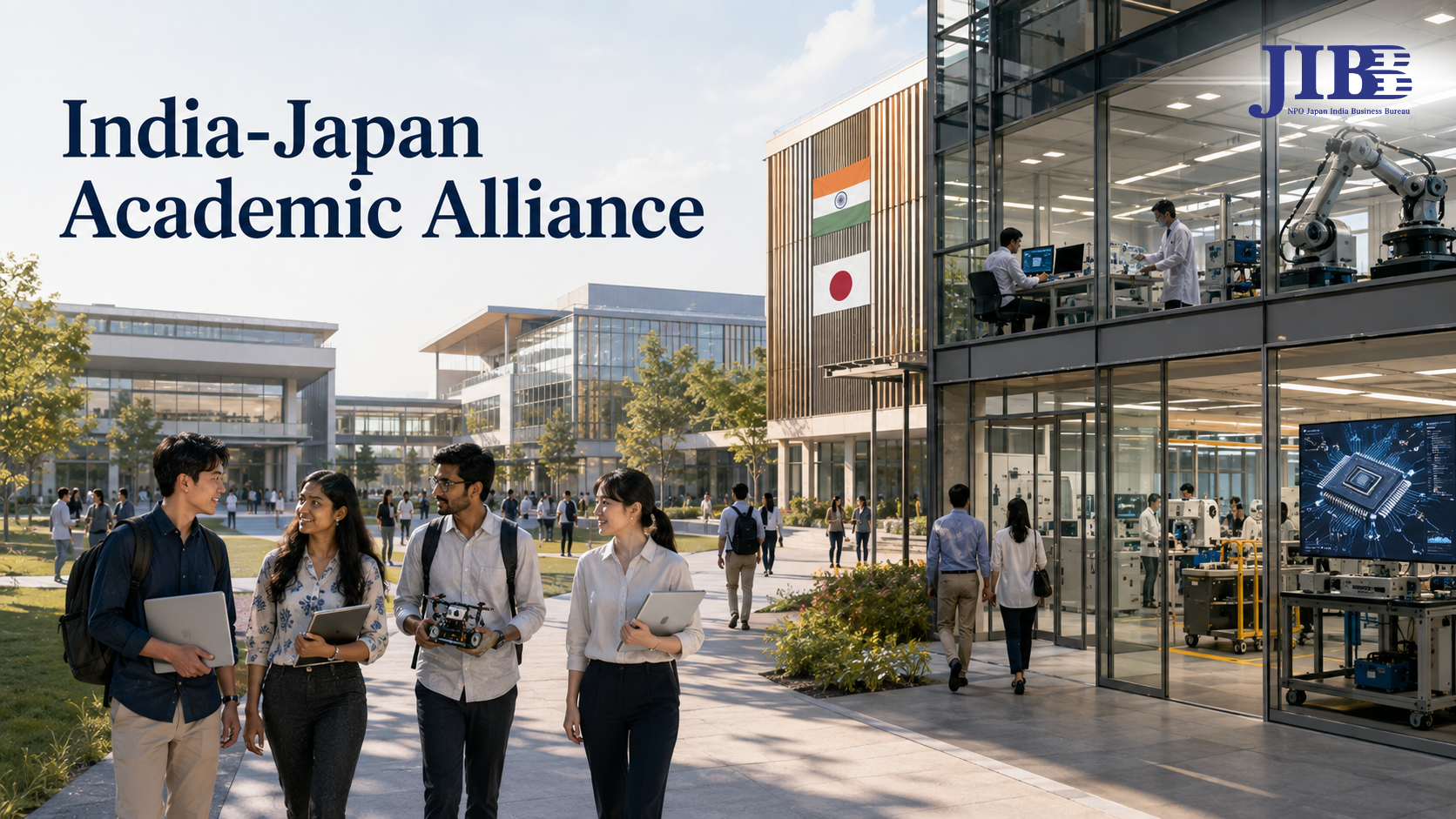
In the light of growing economic partnership between India and Japan, academic collaboration has emerged as one of the most effective ways towards sustainable development. Educational institutions and industries on both sides are now collaborating in the development of a trained and innovative workforce. India Japan Academic Alliance of the Japan India Business Bureau (JIBB) is an effort in this direction which aims at human capital development, collaborative research and innovation by bringing together educational institutions, industries, start-ups, and government bodies. Through its activities, JIBB is making efforts to train a generation of professionals who can effectively operate in both countries.
What is Academic Alliance?
India Japan Academic Alliance is a JIBB program connecting the academia, industries, start-ups, and government bodies from India and Japan in the fields of education, research, innovation, and workforce development.
Why Academic Collaboration Matters Between India & Japan?
Educational and professional excellence lay at the core of all successful economic relationships. As India and Japan increase their cooperation in manufacturing, IT, and green energy, there emerges a growing demand for professionals who are versed in business cultures of both countries. The Japanese industry needs professionals, who have not only global experience, but also know about the Japanese business culture and can operate in the rapidly growing Indian talent market. Conversely, Indian institutions benefit from the availability of an advanced research and industrial base in Japan.
The collaboration between academic institutions solves precisely this problem. Joint research projects, international exchanges of lecturers, and programs of industry-related education are helpful in addressing skill gaps in various sectors ranging from semiconductors and artificial intelligence through advanced manufacturing to clean energy. In contrast to traditional educational model, the industry-led education becomes much more valuable in providing graduates with relevant skills for global positions.
Apart from personal benefits for students, the mentioned approach helps to strengthen innovation ecosystem. By collaborating in scientific research and sharing knowledge, Indian and Japanese universities create preconditions for future economic diplomacy.
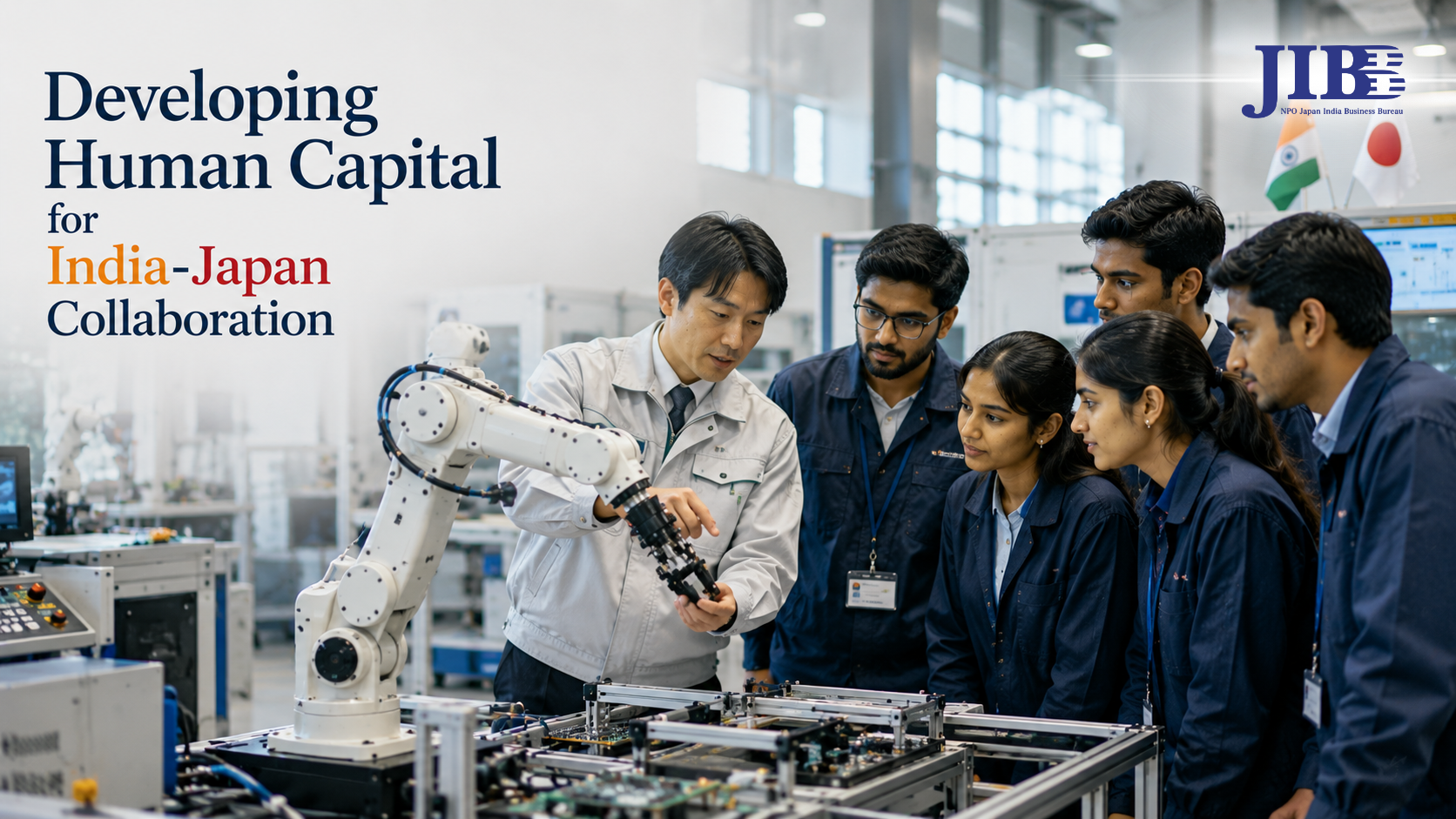
Development of Human Capital
The central theme of the Academic Alliance is developing human capital that will flourish in both the Indian and Japanese business environment. This consists of:
Student and faculty exchange: Formal programs for studying and teaching at partner institutions where they learn through hands-on experience in different academic and professional environments.
Professional skills training: Specialized training in technical and soft skills relevant for the industry in both nations.
Leadership and executive education: Training aimed at working professionals and managers that need to practice business leadership across different cultures.
Japanese language and business culture: Language learning program along with cultural orientation that helps Indian professionals to communicate better in Japanese organizations.
Industry-ready work force development: Training in curriculum developed in collaboration with industries that prepare graduates for industry needs rather than for academic excellence.
It will prepare professionals that will have both technical and cultural adaptability. Learn more about how skill development fuels industrial integration in our article on Japan-India Industry Integration.
Japanese-Style Training Modules for Indian Professionals
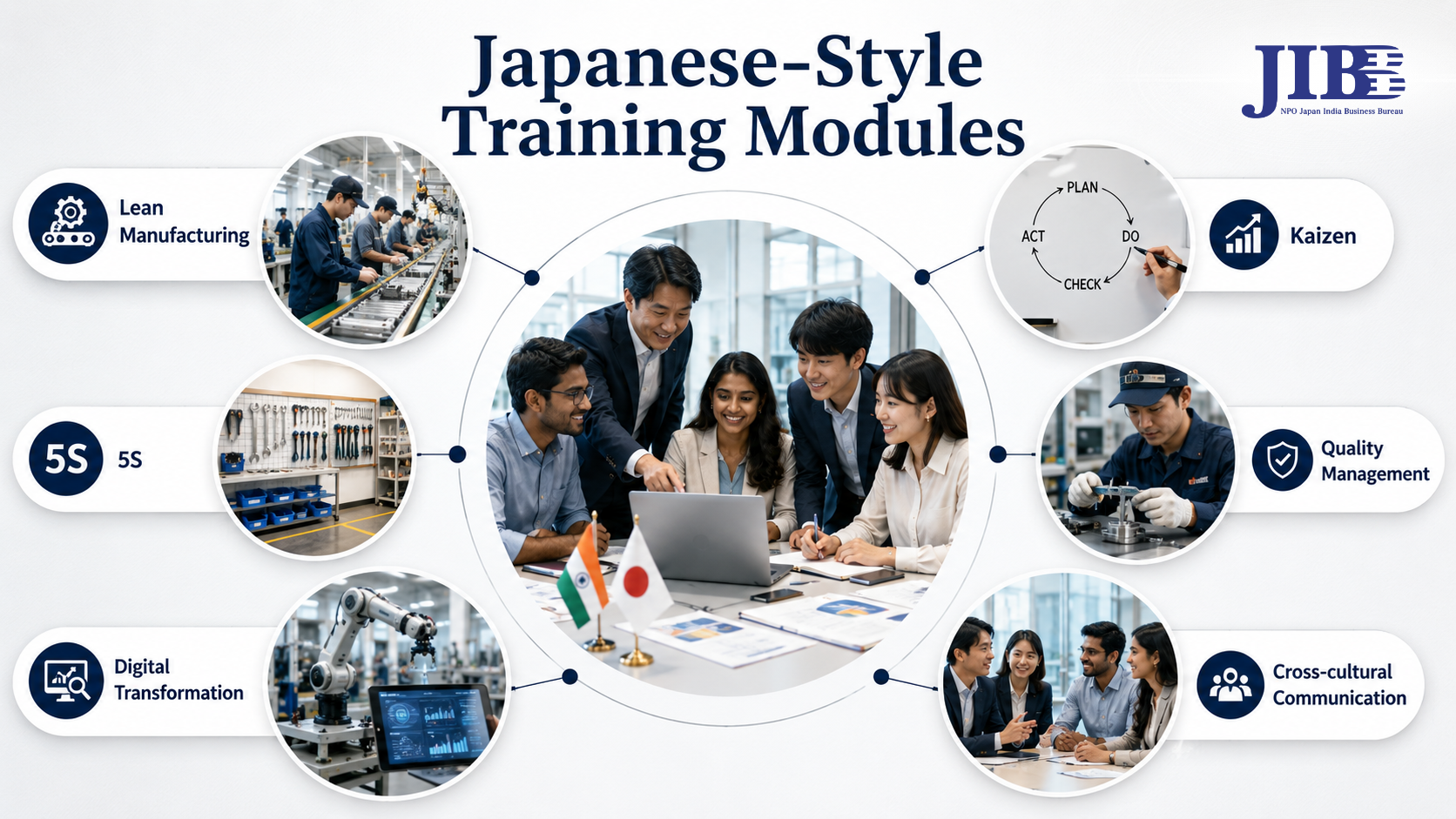
One of the key features of the Academic Alliance is its orientation towards the management practices of Japan that have always been admired around the world for increasing efficiency and quality. The following training modules are specially developed for Indian students, professionals, and organizations who want to embrace the successful experience of Japan:
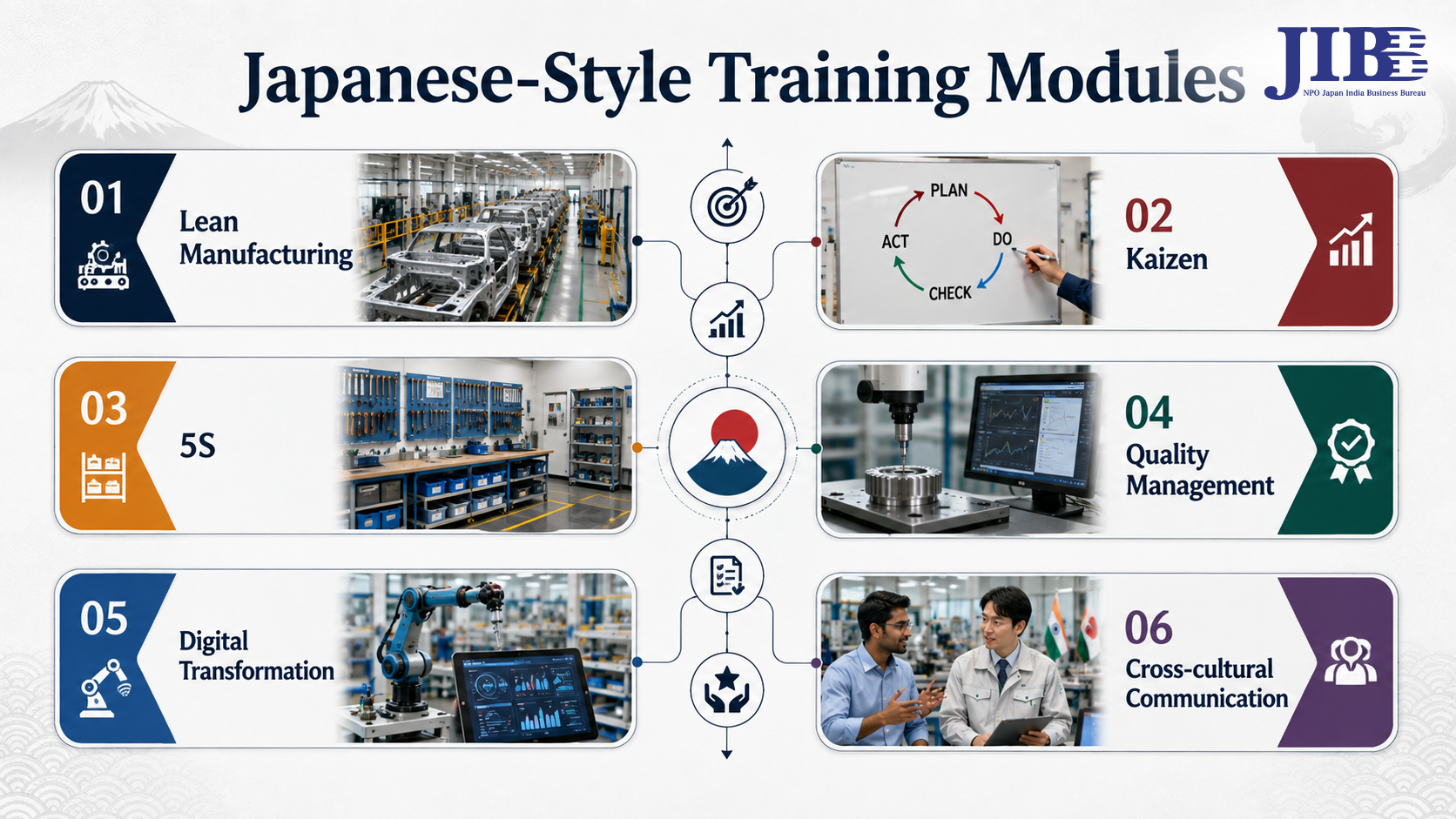
Lean Manufacturing: Tools that concentrate on the elimination of waste and creation of value in production.
Kaizen: A practice of continuous improvement that has been embraced by Indian manufacturing companies in search for efficiency and quality control.
5S: A system of workplace organization (Sort, set in order, Shine, Standardize, Sustain).
Quality Management: Systems based on the rigorous quality management practices of Japan.
Digital Transformation: Training that combines traditional Japanese practices with digitalization and automation.
Cross-cultural communication: Tips on how to work within the structure of Japanese corporations and interact with people through Japanese style communication.
These modules provide Indian professionals and organizations with an opportunity to implement the successful experience of Japan in practice. Read about state-level adoption of technical training in the UP-Japan Investment Meet 2026.
Start-up incubation & Support Between India and Japan
In addition to working on regular academic collaboration, the Academic Alliance has become involved in fostering entrepreneurship as well. Exchange programs between India and Japan have become a gateway to new opportunities for start-ups to enter bigger markets and get more funds and mentoring. Programs provided by JIBB in this field are the following:
Incubation across borders: Programs designed to give Indian and Japanese start-ups mentorship, resources, and networking opportunities in each other's markets.
Commercialization of technologies: Services for implementing innovations and research into marketable products and services.
Investor introductions: Introductions between start-ups and investors from both countries.
Market Entry Support and services: Assistance in entering the Indian and Japanese markets for start-ups from other countries, backed by structured market intelligence from JIBB's India-Japan Market Research & Opportunity Assessment.
Entrepreneurship programs at universities: Cooperation with universities in order to develop start-ups founded by students.
Collaborative Research & Innovation
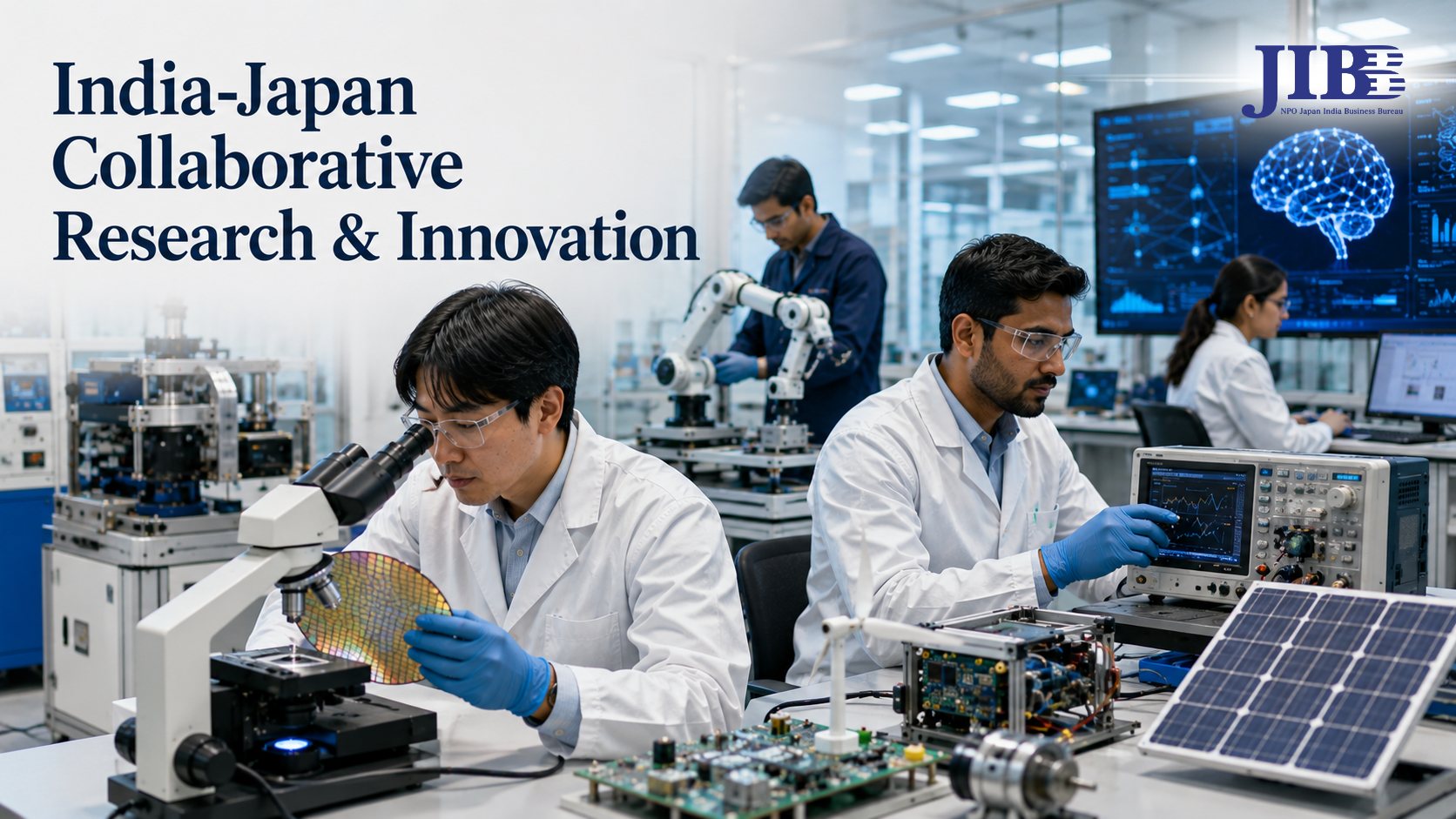
Collaborative research is among the most impactful results of academic cooperation between India and Japan. Collaborations between IITs in India and Japanese universities, as well as collaborations that involve METI, JETRO, JST, and AICTE, among other bodies, have brought innovation to several important areas:
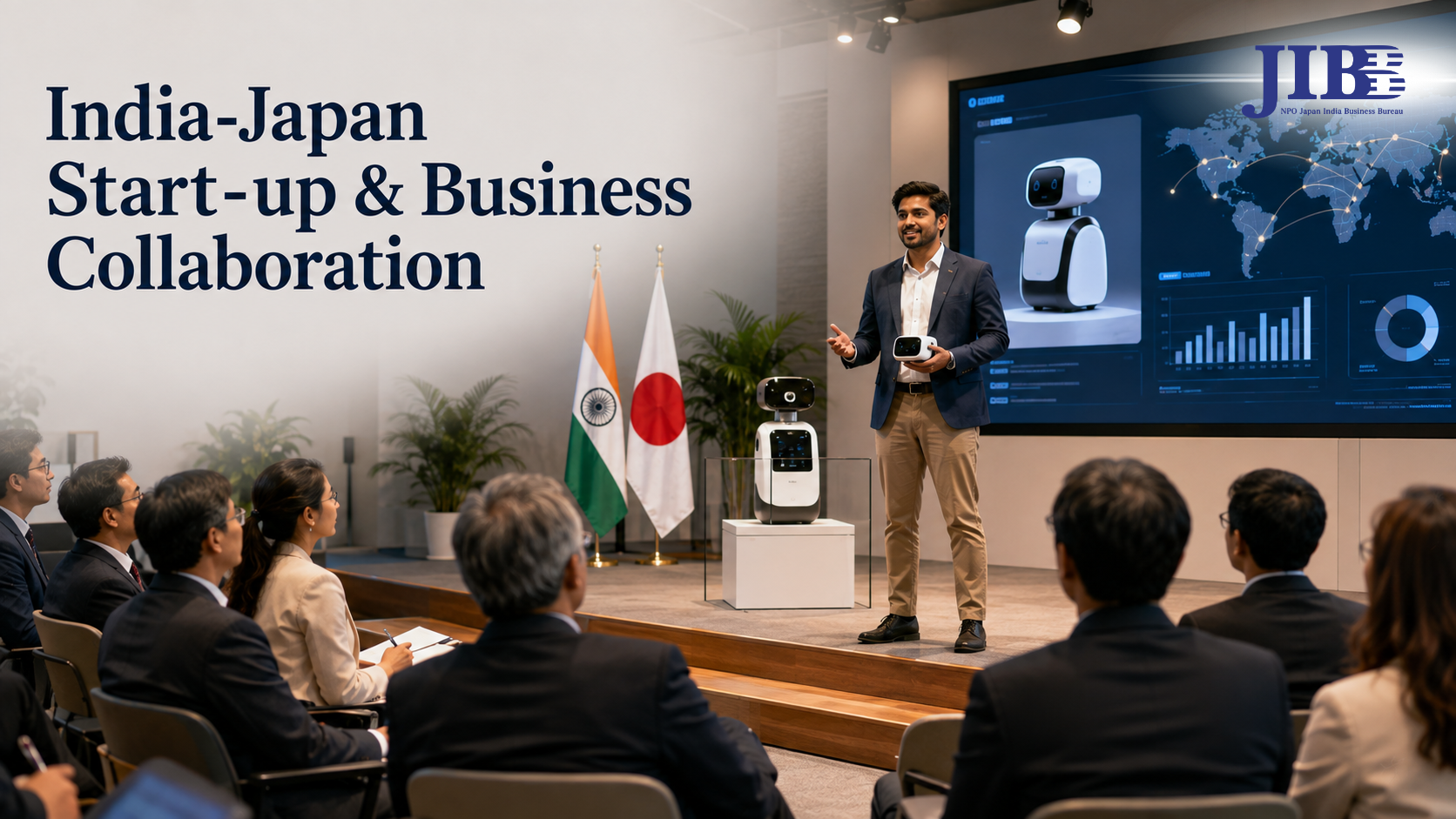
Semiconductors: Collaboration in the field of research that is going to advance India's semiconductor industry using Japan's technology, aligning with the national initiatives detailed in India-Japan Semiconductor Partnership: Beyond Silicon.
Artificial Intelligence: Joint research concerning AI applications in all kinds of industries.
Robotics: Collaboration between India and Japan for research in robotics which is a priority area for Japan and engineering for India.
Green Energy: Collaboration for development of innovations related to green and clean energy.
Healthcare: Research collaboration on medical technologies and innovations.
Advanced Manufacturing: Collaboration for enhancement of manufacturing technology and processes.
It is important to note that such collaborations do not only bring innovation, but they also lay the foundation for long-term academic ties between India and Japan. This is where JIBB membership makes the difference. As a member, your university, business, or research team gets direct access to this growing network, from joint research opportunities to start-up exchanges and industry-academia partnerships already shaping sectors like semiconductors, AI, and clean energy. Here's how JIBB brings it all together.
Role of JIBB in Cross-Country Collaboration
JIBB acts as the glue which connects universities, industries, start-ups, and researchers from India and Japan. The functions that JIBB undertakes in terms of Academic Alliance include:
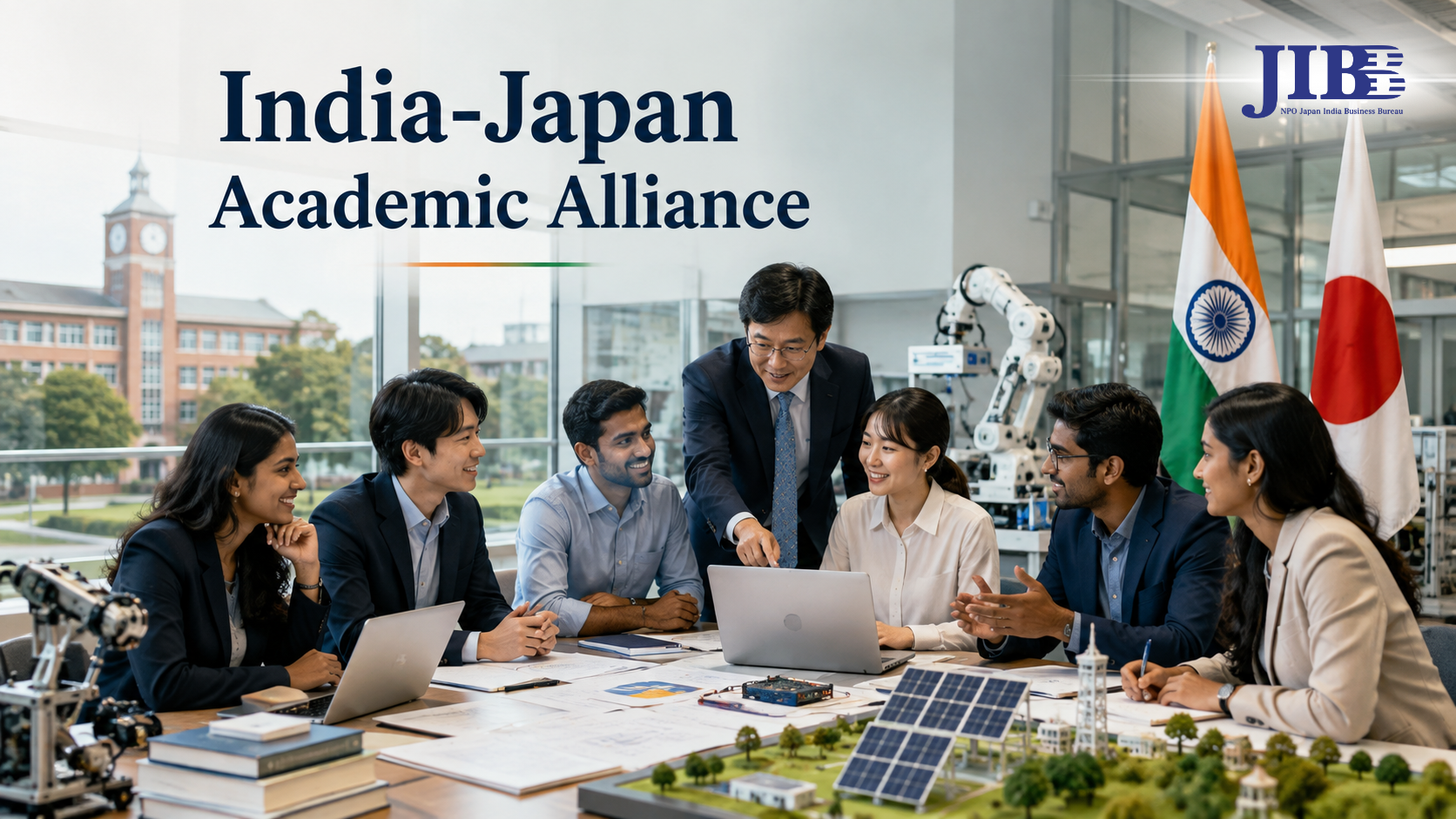
University Collaboration: Working with institutes in order to identify and establish collaborations.
Industry-Academic Collaboration: Linking industries with universities in order to meet their requirements in terms of research and education.
Start-Up Networking: Creating a link between entrepreneurs, incubation centers, and venture capitalists.
Research Collaboration: Supporting joint research projects in the identified sectors.
Knowledge Transfer: Fostering transfer of knowledge and expertise.
Business Matching: Linking companies in India and Japan for mutual benefits.
In this way, JIBB converts academic knowledge into business results. Learn more on our About JIBB page.
Benefits at a Glance
| Stakeholder | Key Benefits |
|---|---|
| Students | Global exposure, internships, career opportunities |
| Universities | International partnerships, joint research |
| Startups | Mentorship, funding, global market access |
| Businesses | Skilled talent, innovation, R&D collaboration |
Frequently Asked Questions (FAQs)
1. What is JIBB's Academic Alliance?
It is a JIBB initiative that connects universities, industries, start-ups, and government organizations in India and Japan to promote education, research, innovation, and workforce development.
2. Why is academic collaboration important between India and Japan?
It helps close skill gaps in critical sectors, builds a globally competent workforce, and strengthens long-term economic and diplomatic ties between the two countries.
3. What training programs are offered under the Academic Alliance?
Programs include Japanese-style training modules such as Kaizen, Lean Manufacturing, 5S, and Quality Management, along with language training, leadership education, and industry-focused skill development.
4. How can organizations collaborate with JIBB on academic initiatives?
Universities, businesses, and research institutions can partner with JIBB to co-develop training programs, joint research projects, and student or faculty exchange initiatives.
5. How does JIBB help start-ups expand internationally?
JIBB supports start-ups through cross-border incubation, investor connections, technology commercialization support, and guidance on entering new markets.
6. What are Japanese-style training modules?
These are structured programs based on proven Japanese business philosophies such as Kaizen and Lean Manufacturing, designed to improve efficiency, quality, and workplace organization.
7. How does JIBB support universities and research institutions?
JIBB facilitates university partnerships, joint research collaborations, and knowledge exchange programs that connect Indian and Japanese academic institutions.
8. Which sectors benefit most from India-Japan academic collaboration?
Semiconductors, artificial intelligence, robotics, clean energy, healthcare, and advanced manufacturing are among the key sectors benefiting from collaborative research and training.
Get Involved
No matter if you're a representative from the academia, start-up organization, research institute or a business entity seeking for cross-border talent streams, there is a platform that will help you connect and evolve - The Academic Alliance from JIBB.
Join JIBB for the partnership, or find out more about our Business Matching, Membership, Events and Sectors. Contact JIBB today to explore cross-border academic and industrial opportunities.